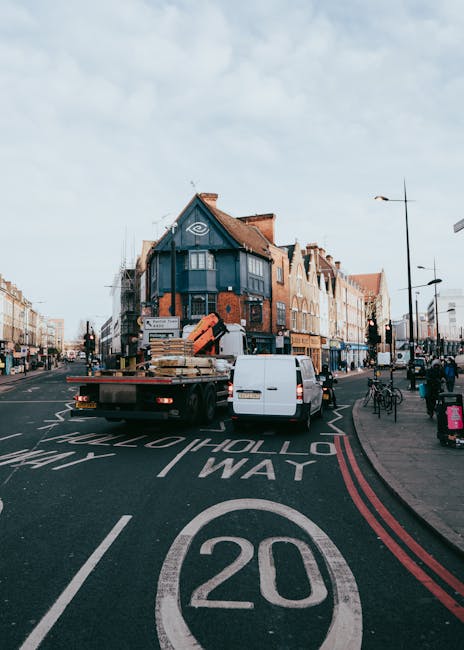
Ilford High Road loading access tips for removals
If you are planning a move on or around Ilford High Road, the loading part can be the bit that makes or breaks the day. The road is busy, the pavements are active, and space disappears quickly once the morning rush builds. Good Ilford High Road loading access tips for removals are not just about convenience; they help you avoid delays, reduce stress, and keep everyone safe while the boxes are moving. In our experience, the people who prepare the loading plan properly are the ones who finish calmer, cheaper, and with fewer last-minute surprises. Let's face it, moving day is already noisy enough without circling the block looking for a van space.
This guide breaks down how loading access works, what to check before the van arrives, and how to handle the practical realities of a London high road move. You will also find a checklist, a comparison table, and answers to the questions people actually ask when they are trying to organise removals in a tight urban setting.
Table of Contents
- Why loading access matters on Ilford High Road
- How loading access works in practice
- Key benefits and practical advantages
- Who this is for and when it makes sense
- Step-by-step guidance
- Expert tips for better results
- Common mistakes to avoid
- Tools, resources and recommendations
- Law, compliance, standards, or best practice
- Options, methods, or comparison table
- Case study or real-world example
- Practical checklist
- Conclusion
- Frequently asked questions
Why Ilford High Road loading access tips for removals Matters
Ilford High Road is not the kind of place where you can assume the road will stay clear long enough for a relaxed loading window. Traffic patterns change through the day, side streets fill up, and the available kerb space can be snapped up fast. For removals, that means the loading area needs to be thought through before moving day, not after the driver is already idling outside.
The main issue is simple: a removal van needs access, and access in a built-up urban road is rarely automatic. If you leave it to chance, you may end up carrying furniture farther than expected, blocking pedestrians, or losing time while the team waits for a gap. That is where planning pays off. A well-organised loading setup can mean the difference between a smooth two-hour job and a stressful afternoon of stop-start lifting.
There is also a safety angle. Busy roads bring more moving vehicles, cyclists, delivery drivers, and people stepping out of shops or crossings. The more predictable your loading point is, the less likely it is that someone gets caught out. For anyone moving a full household, office, or even a small flat, that matters a great deal.
If you are comparing service options, it can help to look at how a mover handles the loading stage as part of the wider job. Pages like removals and man and van explain the sort of support people often need when access is tight. In practice, the right approach depends on the property, the vehicle size, and how much walking distance there is from door to van.
How Ilford High Road loading access tips for removals Works
Loading access for removals is really about matching three things: the vehicle, the property, and the street conditions. On a road like Ilford High Road, the vehicle cannot just stop anywhere and expect everything to work out. You need a realistic loading point, enough room to manoeuvre, and a clear idea of how long the stop will take.
A typical process goes like this. First, you identify where the van can legally and safely pause. Then you check whether the front of the property, a side access, or a nearby side road is better for loading. After that, you decide what items should come out first, which items need protective wrapping, and how to keep the path from the property to the van as short as possible. Simple on paper. Slightly less simple when there are cars, buses, and people coming and going every minute.
For many moves, the access plan is shaped by the property type. A ground-floor flat with direct road access is a different story from a maisonette above a shop or a building with limited frontage. That is why local removals teams often ask for photos of the entrance, stairs, and street view before move day. It gives a much better sense of whether the van can sit close enough to the door to make the loading efficient.
Some customers also combine moving with storage when access is awkward or timing is split. If that sounds familiar, removals and storage, short-term storage, and household storage can be useful options. That is especially handy if the new place is not ready yet, or if you want to reduce the number of items being loaded at one time.
Key Benefits and Practical Advantages
The real value of planning loading access well is not just speed, although that is a big one. It is the knock-on effect across the whole move.
- Less wasted time: A van that can load near the entrance reduces carrying distance and keeps the schedule moving.
- Lower risk of damage: Fewer turns, fewer steps, and shorter carries mean less chance of scuffs, dropped items, or scraped walls.
- Better safety: A tidy loading zone reduces trip hazards and makes it easier to stay aware of traffic and pedestrians.
- More accurate planning: When access is clear, it is easier to estimate how long the move will take.
- Less pressure on the day: You are not improvising in front of an open van with half the kitchen still inside.
There is a quieter benefit too: good access planning makes everyone calmer. You notice it in the tone of the day. The team is less rushed, the customer is less flustered, and even the street feels a bit less hostile. To be fair, that calm matters. Moving is stressful enough without turning the kerbside into a puzzle.
If your move involves fragile items or business equipment, good access also supports careful handling. A shorter, clearer route from the property to the vehicle makes it easier to move boxes, wrapped furniture, and electronics without putting them down in awkward spots. That is one reason people planning office or specialist moves often look at office removals and packing services alongside the route plan.
Who This Is For and When It Makes Sense
This guide is useful if you are:
- moving house or flat near Ilford High Road
- organising a small business or office relocation
- using a man and van service with limited loading space
- moving bulky furniture from a high-street property
- trying to avoid parking and access problems on a tight schedule
- combining removals with self storage because timings do not line up neatly
It makes especially good sense if you are moving from a property with roadside access, a busy forecourt, a shared driveway, or a narrow entrance. Those are the situations where a "we'll sort it on the day" approach can go wrong rather quickly. And once it goes wrong, the fix is usually slower and more expensive than the planning would have been.
Families often need this advice when moving from flats or terraced properties with awkward frontages. Small business owners need it when stock, desks, and filing items have to be cleared efficiently. Students and sharers may need it if they are moving at peak times, with lots of traffic and not much time to hang around. If that sounds like you, there is nothing unusual about it. It is just urban moving, which can be a bit of a faff if you do not prepare.
Step-by-Step Guidance
Here is a practical way to plan loading access without overcomplicating it.
1. Check the street layout before move day
Look at the property frontage, nearby crossings, bus stops, corners, dropped kerbs, and the width of the road outside. If possible, walk the route from the front door to the safest stopping point. You are looking for a loading point that keeps the carry short without creating a hazard.
2. Confirm where the van can stop
Do not assume the van can sit directly outside the property. Think about whether another car, local traffic, or a restricted section will get in the way. A van that has to wait two doors away is still workable; it just needs the right handover plan.
3. Match the vehicle size to the access
Sometimes a smaller vehicle is the smarter option, especially for narrow streets or busy high-road conditions. A bigger van may carry more in one go, but if it cannot park safely enough to load, you end up losing that advantage.
4. Prepare the items in loading order
Put the awkward, fragile, and essential items near the exit first. Then group boxes by room or priority. This is one of those little things that saves real time. If the kettle, documents, and the first-night essentials are buried under three wardrobes, nobody is going to thank you later.
5. Clear the path inside the property
Move shoes, mats, loose cables, and anything else that could catch a foot or wheel. Open doors fully if you can. If there are stairs, make sure landings are clear too. The smoother the internal route, the quicker the loading.
6. Protect both the items and the space
Blankets, wrap, tape, and floor protection all help. They are especially useful if you have narrow doorways, polished flooring, or awkward corners. In our experience, a small bit of protection at the start saves a lot of sighing later on.
7. Keep communication simple
Decide who is speaking to the driver, who is directing items, and who is checking rooms. Too many voices can slow things down. One calm point of contact is usually best.
8. Leave a little breathing room
If the schedule feels tight, build in a margin. Streets are unpredictable. A delivery vehicle can block access for a minute, or someone may be loading nearby. A tiny buffer keeps the day from wobbling.
For some customers, the best preparation also includes decluttering before the move. If that is part of your plan, consider small removals or mobile self storage if you want to separate what is going now from what can wait. That can take a surprising amount of pressure off the loading stage.
Expert Tips for Better Results
These are the small details that tend to separate a smooth move from an awkward one.
- Send photos in advance: A clear image of the entrance, pavement, and street frontage can help the removals team judge the best loading point.
- Use room labels: Labels do not just help unpacking; they help decide loading order, too.
- Keep one access lane for people: Even if you are loading steadily, maintain a clear walking line for family members or staff.
- Move the largest items first only if access allows it: Sometimes the biggest item should come out early while the route is clear. Other times, it is smarter to start with smaller, easier loads while space is being set up.
- Check for door swing and stair corners: A sofa that looks fine on paper can still snag on a narrow turn.
- Choose timing carefully: Early starts can help, but not if everyone is rushed and the street is still partially blocked with commuter traffic.
One thing people often overlook is how weather changes the whole process. A damp morning can make floors slippery, and rain makes cardboard weaker. If it looks like drizzle, you do not need drama. You just need a dry route, more care, and a few extra minutes. Simple enough, though annoying.
If you are moving for work reasons, you may also want to think about storage and document handling together. Pages like document storage and business storage may be useful if you need to separate sensitive files, stock, or equipment during a staged move.
Common Mistakes to Avoid
Most access problems are avoidable. The tricky bit is that they usually feel small right up until they cause a delay.
- Assuming the van can stop right outside: This is the classic mistake. A quick glance is not the same as a proper access check.
- Leaving parking decisions to the last minute: High-road parking often changes from one hour to the next.
- Not measuring awkward furniture: If the sofa or wardrobe is too large for the route, you need a plan before lifting it.
- Loading in the wrong order: Put priority items somewhere accessible, not at the back of the van under heavy boxes.
- Forgetting pedestrian safety: A rushed loading point can become a trip hazard very quickly.
- Ignoring building rules: Flats, managed properties, and shared entrances sometimes have access expectations you need to follow.
- Underestimating time: A ten-minute carry becomes twenty when the path is awkward and the road is busy. It happens.
Another subtle mistake is not planning for what you cannot control. You cannot control the traffic completely, and you cannot make the High Road empty just because your schedule would prefer it. What you can control is the amount of lifting, waiting, and confusion your move creates. That is the bit worth getting right.
Tools, Resources and Recommendations
You do not need a huge kit to improve loading access, but a few simple tools help a lot.
| Tool or item | Why it helps | Best for |
|---|---|---|
| Furniture blankets | Protects finishes and reduces scuffs during short carries | Sofas, tables, wardrobes |
| Ratchet straps or tie-downs | Keeps load stable in the van | Mixed household or office loads |
| Floor protection | Helps preserve hallways and entrances | Flats, shared buildings, polished floors |
| Box labels | Makes loading order and unloading easier | Any move with multiple rooms |
| Hand truck or sack barrow | Reduces manual carrying on heavier items | Appliances, boxed stock, archive files |
| Door wedges | Keeps access points open while items move in and out | Busy multi-trip moves |
It can also help to choose the right support service for the move type. For example, house removals are usually best when you need a full loading plan and more furniture handling, while flat removals can be more suited to tighter access, smaller vehicles, and careful stair or entrance coordination. The move type matters more than people think.
If your access is particularly tight, local removals and office storage can support a phased move, which sometimes is the cleanest answer. Not glamorous, perhaps. But practical.
Law, Compliance, Standards, or Best Practice
For removals in a busy urban area, the key compliance issues usually relate to parking, loading safety, access to the highway, and duty of care to other road users and pedestrians. The exact restrictions can vary by location and circumstances, so it is sensible to check the relevant local rules rather than guessing. If there are permit needs, waiting restrictions, or time windows for loading, those details should be confirmed before move day. That is especially true on busy roads where enforcement is more visible and tolerance for obstruction is low.
Best practice is to keep loading as tidy and brief as possible, avoid blocking dropped kerbs or crossings, and ensure that the team can move items without putting themselves or others at risk. Where a vehicle may need to pause on the highway, careful planning is more important than bravado. Nobody wins points for making the road messy.
Insurance matters too. Removals work benefits from clear cover arrangements for goods in transit and handling practices that reduce damage risk. If you are comparing providers, it is reasonable to ask how they approach liability, what is covered, and how items are packed or secured. The details are worth reading, not skimming. Pages such as insurance and safety, health and safety policy, and terms and conditions can help you understand the expectations behind the service.
For more background on local moving conditions, it may also help to read about related topics such as parking permits for removals in Ilford and removal van restrictions. They are useful reading if your move is likely to involve roadside loading rather than off-street access.
Options, Methods, or Comparison Table
Not every move on Ilford High Road needs the same loading method. Here is a simple comparison to help you decide what feels realistic.
| Method | Best for | Pros | Trade-offs |
|---|---|---|---|
| Direct kerbside loading | Short, clear access near the property | Fast, efficient, less carrying distance | Depends heavily on parking and timing |
| Nearby side-street loading | Busy frontage or limited stopping space | Often safer and easier to control | Longer carry, more labour |
| Smaller vehicle approach | Tight roads or difficult frontage | More manoeuvrable, better for constrained access | May need more trips |
| Split move with storage | Unclear dates, staged handover, or limited space | Reduces pressure on one day | Extra handling and planning |
There is no single "best" option for everyone. If the front of the building is straightforward, kerbside loading may be ideal. If the road is hectic or the frontage is awkward, a side-street strategy may be much calmer. And if dates do not match up, storage can save the day. A bit less elegant perhaps, but very effective.
Case Study or Real-World Example
Here is a realistic example. A small household move near Ilford High Road had two bedrooms, a sofa, several boxes of books, and a few fragile items. The first instinct was to plan for the van to stop directly outside. On inspection, though, the available space looked tight and would have created a poor loading angle.
Instead, the team arranged a slightly better stop point nearby, used a smaller vehicle than originally planned, and pre-sorted items so that the heaviest furniture came out only once the route was fully clear. The hallway was protected, the boxes were labelled by room, and the most important bags were loaded last so they could be unloaded first. Nothing dramatic. Just sensible planning.
The outcome was not only smoother but calmer. There was less standing around, fewer awkward lifts, and no last-minute scramble when a delivery vehicle passed by. Truth be told, that is what good access planning often looks like: it does not feel exciting while you are doing it, but it saves the day quietly.
For moves like this, a service such as small removals or furniture storage can be useful when you need flexibility without overcommitting to a full-size move straight away.
Practical Checklist
Use this before move day. It keeps the loading plan grounded in reality.
- Confirm the exact address and entrance point
- Check whether the van can stop legally and safely near the property
- Review any parking or loading restrictions that may apply
- Measure the largest items and note any tight turns or stairs
- Label boxes by room and priority
- Protect floors, walls, and furniture edges
- Decide who will direct the loading process
- Prepare a backup plan if kerbside space is unavailable
- Keep essential items accessible for first unloading
- Allow extra time for traffic or roadside delays
Expert summary: The easiest loading move is usually the one that was planned as if access might be slightly worse than expected. That mindset sounds cautious, but it is very effective. If the van can stop closer than planned, brilliant. If not, you are still ready.
One more thing: if you are juggling packing and timing at the same time, it is worth looking at packing services and secure storage. Those two can make the loading stage far more manageable, especially for mixed-value loads or items you do not want out in the open any longer than necessary.
Conclusion
Good Ilford High Road loading access tips for removals come down to simple principles done properly: check the street, plan the vehicle position, sort the load order, and leave enough room for real-world delays. When you respect the reality of a busy high road, the move gets easier almost immediately. Less stress, less backtracking, fewer surprises.
If you are preparing a move and want a service that understands awkward access, busy roadside loading, and the practical side of London removals, it helps to speak to a team early rather than leaving it until the van is already outside. A short conversation now can save a long, messy hour later. And honestly, that is usually worth it.
Get a free quote today and see how much you can save.
With the right plan, even a tricky loading point can feel manageable. One careful step at a time, and the whole job starts to breathe a little easier.
Frequently Asked Questions
What are the most important Ilford High Road loading access tips for removals?
The biggest priorities are checking where the van can safely stop, reducing the carrying distance, confirming any restrictions, and preparing the load order before the team arrives. Those four things solve most of the usual headaches.
Do I need a parking permit for removals on Ilford High Road?
Sometimes you may need one, depending on the exact bay, restrictions, and timing. It is best to confirm the local rules before moving day rather than assuming roadside loading will be fine. A quick check saves a lot of stress.
Can a removal van stop directly outside my property?
Not always. On a busy road, nearby traffic, loading restrictions, or parked vehicles may make direct access impossible. A good removals plan always includes a backup stopping point.
How early should I plan loading access for a move?
As early as possible. Ideally, you should think about it while booking the move, not the night before. If the street is tight or the building has unusual access, early planning is even more important.
What should I do if the street is too busy for kerbside loading?
Use a nearby side street, a smaller vehicle, or a phased loading method. Sometimes split loading with storage is the calmer choice. It is not glamorous, but it works.
Are smaller vans better for Ilford High Road removals?
Often yes, if access is tight or manoeuvring room is limited. A smaller van may need more trips, but it can be easier to position safely and may reduce delays.
How can I make loading faster on moving day?
Label boxes, clear the path, protect surfaces, and keep priority items ready first. It also helps to have one person coordinating the process so decisions are not being repeated over and over.
What items should be loaded last?
Usually the essentials you want to reach first at the new place, such as kettle, documents, chargers, and overnight bags. That way they come off the van first and do not get buried under heavier items.
Is roadside loading safe on a busy high road?
It can be safe if planned properly, but the risk rises quickly when vehicles are stopping unpredictably or items are left in the path of pedestrians. Safety should always come before speed.
What if my move involves heavy furniture or awkward items?
Measure the items, check the route, and consider whether disassembly, protective wrapping, or specialist handling is needed. Large furniture can look manageable until you reach the first tight turn.
Can storage help if loading access is difficult?
Yes. Storage can make a move much easier if you need to split the job into stages, reduce the volume going out at once, or wait for the new property to be ready. It is a practical option, not a fallback.
What is the biggest mistake people make with removals access?
Assuming the van will be able to load right outside without checking. That one assumption causes more delays than almost anything else. A proper access check is always worth the time.
If you want to compare your moving options or see how a local team handles different access situations, it can also help to review Ilford High Road office removals, booking delays, and same-day removals costs for a broader local picture.